Give a little background to yourself and your experience, ie. how long have you been in the business, where you started and how it all got going?
Music was always a really important part of our lives growing up. I did music at school and really got into swing and jazz, but when I started playing flute everything changed and I started working at Paul Bothner music.
I learned the most from Roy Viljoen, who gave me so many valuable lessons on running a business. I owe Bothners a lot. In 1994 I started doing live sound, as well as recording demos for our bands. In 1997 I did some sound design for Koos Turenhout’s Ivory Tower studio. Koos was a huge inspiration and he ended up being a massive part of Sound & Motion in the early days.
I joined The London Connection as senior engineer and here I fell in love with analogue tape and mixing OTB. I left to go to Amsterdam for a bit where I learned more about TV and radio post audio and came back in 2002 to start Sound & Motion Studios.
Why did you choose to get into audio and has it turned out how you expected?
To be honest it sort of just happened. When I got into sound engineering you just had to do a lot of that stuff yourself. Decent studios were very expensive in the 90s, there were no courses and many small studios were really quite bad. This world is a truly fascinating place and I couldn’t imagine NOT doing sound. It’s a huge amount of fun especially when you figure out something groundbreaking.
I’m really glad that I got into it when I did as an apprentice, and now as an educator I think an apprenticeship of some sort is vital… etiquette, for examples, can’t be taught like how to kick the MTR90 in the right spot – that can’t be learnt at college.
When did you start Sound in Motion?
Outline a brief company history.
I started Sound & Motion Studios in 2002 with an idea that a little studio and booth to servicing the growing multimedia industry would be small enough not to have too many overheads but powerful enough to service the gaming and new media communities. That is completely NOT what happened!
Actually I had a really small place at first with animator Leigh Van Der Byl and the idea was probably a good one, but we jumped the gun. She wanted to move to London and I wanted a bigger place so I moved to Harrington Street. We had this small studio and then started setting up in other parts of the building as money became available.
Over the next three years we added another floor until we had a control room, live room and dead booth in a music facility as well as an edit suite, a 5.1 post room and a digital mastering suite. In 2006 we set up a studio in Jo’burg for training and commercial use. We have a long standing relationship with City Varsity where I’ve lectured part time for over a decade, so we decided to set up the space in Newtown by their campus as part of a reciprocal relationship. The same year we started working in Lagos doing reality TV (under Jungle Filmworks) and the following year we started running reality TV productions of shows (similar to Pop Stars and Survivor). We are also working in Ghana and hope to open Sound & Motion Dublin at the end of 2013.
Since you are a bass player and have played with Lark for a number of years, how do you think this has influenced you as an engineer or producer? Is being a musician important to becoming a great engineer?
I think being part of Lark has influenced me more as a result of the kinds of bands who want to work with me. I often get approached by bands and artists who want an engineer who is comfortable working with electronic and acoustic elements together, which makes sense given Lark’s sound. I also work on a lot of jazz and world music.
Should you be a musician to be a good engineer is an interesting one – I say no. If someone really loves music and listens to a crazy array of bands and genres and GETS it, they will crack a better sound than someone who, for example, plays guitar in one style and only listens to music in that one style.
What is your favourite part of the process (tracking, mixing, editing) and why?
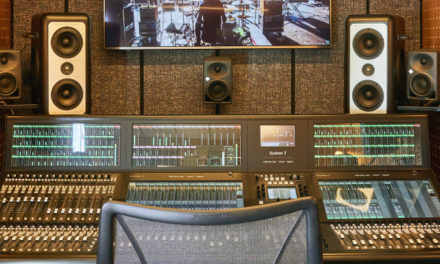
Tricky one. I love mixing, especially when you have enough time. I mix OTB on my Audient 90% of the time and I get a real kick out of hybrid mixing. You have to make a decision because once you strike the desk and outboard, it’s gone! My favourite part of the process is working with an amazing producer, the kind of relationship where you finish each other’s sentences.
What do you feel is the key to a successful studio and audio career?
Remember you will always be a student; that you will always learn from all the amazing people that come to work with you and remain humble to what they can teach you. Of course you are helping to craft someone’s dreams and aspirations, so treat them like gold.
What is your favourite meal, holiday destination and movie and why? (Just for fun.)
A curry or a proper winter roast.If it’s just a holiday, it’s a split between Ireland or a certain special cottage in Citrusdal.
Movie: Master and Commander. The cinematography and sound are just on another level, more importantly the script is beautifully crafted and the acting exquisite.