Centurion-based Platteland recently invested in a new L-Acoustics ARCS WiFo sound system, equipping the venue with a truly world-class, international rider compliant rig as it looks to establish itself as one of the country’s leading live music venues.
According to Rudi Oosthuizen, co-owner of Platteland, “The venue developed from the point of view that we need places in South Africa that can provide a quality stage and quality sound system for our artists. I know there are a lot of bands playing in smaller pubs, but for them to come and play on a stage like this, with big sound, is remarkable for them. I play in a band, and I know how important it is.”
Meanwhile, brother and fellow co-owner, Marcus Oosthuizen, explains that “while the venue is new, my partners and I worked on the concept for the past three years, waiting patiently for the perfect site. It took close to a year to secure the right deal and then to build the venue. We wanted to give the live music industry a boost by opening an internationally-equipped venue which, in turn, would bring the best music to our customers and enable them to experience a quality production.”
Image: H40 Prolyte structure enables flown rigging at Platteland
WHY L-ACOUSTICS?
The Oosthuizen brothers explain why Platteland decided to opt for the L-Acoustics system:
“When we started, we had a CRV line array system – and we all assumed that’s what we would use in the new Platteland venue. But, when we got it out of storage, we discovered that we would need to replace it, as it was extensively weather-damaged. So, that left us with a bit of a problem, because we hadn’t budgeted for a brand-new L-Acoustics system,” Rudi says with a grin.
“We looked at a number of options,” he continues, “However, we invested in the venue with the aim of ensuring that the sound quality was up to international standards – and it quickly became evident that the L-Acoustics system fits that bill.”
Marcus echoes Rudi’s thoughts, saying that their search for versatility, power and clarity of sound application led them to the L-Acoustics brand: “We did our research and spoke to many sound companies and audio engineers, and all of them mentioned L-Acoustics. We required a clean sound that would deliver a punch, and without a doubt, that is what the ARCS WiFo system has delivered.”
To complement the system’s pristine sound – which features patented L-Acoustics Wavefront Sculpture Technology – Platteland invested in a DiGiCo S21 mixing console, which is a cost-effective solution that still delivers the power and reliability for which the DiGiCo brand is known.
According to DiGiCo, the compact dual-screen design of the S21 provides ten channel strips per screen, allowing the operator instant feedback and control on 20 simultaneous channels. This gives great reassurance when mixing large shows, and the newly-designed drag, swipe and drop channel layout system makes it simple for operators to move channels and audio busses across the surface to design their own custom fader layouts. The advantage of having two screens on the S21 is that it not only gives you more channels to view at any one time, but it allows you to utilise one as a setup or master screen, while still operating the system with other.
“We looked at a number of options, however, we invested in the venue with the aim of ensuring that the sound quality was up to international standards – and it quickly became evident that the L-Acoustics system fits that bill.”
– Rudi Oosthuizen
OPTIMISED INSTALLATION
Rudi explains that during the sound design phase, the DWR team came to the venue armed with specialised computer software and conducted a comprehensive analysis of the space. “They told us where our bass waves would be travelling, and that we were going to need fillers by the pool table and under the balcony, by the VIP bar and they custom-designed the layout of the system around the shape and the acoustic dynamics of the venue.”
Platteland’s interior is an attractive, high-ceilinged space, and DWR’s Jaco Beukes – who managed the project – explains that “due to the design of the venue we were not able to hang anything from the beams in the ceiling, but we had a fair amount of gear that needed to be suspended.”
In response to these challenges, the team designed an 8 x 5 metre, 4.5-metre high, H40 Prolyte structure that overshadows the entire stage, with a circle truss flown on the back of the main structure and six totems with lights and TV displays on them.
“We needed a clean and professional look that would also be safe and secure and future-proofed so that we can add sound, AV or more lights with ease of mind to the structure. Prolyte delivered on the spec,” reports Marcus.

PLATTELAND MEANS PROFESSIONALISM
All respondents were extremely positive about the future for Platteland as a live music venue.
As Rudi explains, “We use Kilowatt Productions for our in-house engineers. Working with the L-Acoustics system and the DiGiCo S21 desk, we have some of the best technology in the world at our fingertips. It is digital-based, which is a bit of a learning curve for those who are familiar with analogue – but once you’ve got the hang of it, the results are incredible. All the reviews that we have had about the sound quality so far have been brilliant.”
The venue looks forward to hosting sold-out shows for bands such as Australian hard-rockers Hands Like Houses, in the coming weeks. Marcus comments: “We have an amazing internal marketing team, and by offering artists the best possible platform in regards to audio and the production as a whole, we find that bands are loving the opportunity as much as we are enjoying having them on our stage.”
Beukes adds: “It’s clear that the Platteland team have put much thought into their establishment, without doubt making a permanent impact on the local music scene. They have invested in quality gear and quality personnel. We wish them every success for the future and would like to thank them for the opportunity and their support.”

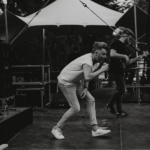
Roan Ash performing at Platteland
Rudi concludes by highlighting the effect he hopes Platteland will continue to have on the local music scene. “Being on a big stage, with a good system behind you, just gives bands and audiences that sense that it’s awesome playing music again. We’ve played shows in the past where our bassist has had to fill in as a sound engineer – run over and tweak things on the desk in between songs – and that’s no way to build a proper, professional live music industry. We want to be the kind of venue that leads the turn towards top-class professionalism in our industry.”